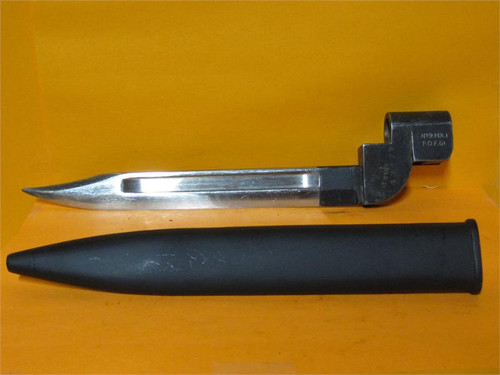




In post WW2 years, numerous bulk shipments of arms were shuffled into Ethiopia under Haile Selassie. Some of the arms were of British , U.S., German and about 2 dozen other origins. The amalgamation of arms was a real anomaly for logisticians trying to keep everything running. Enfield #1Mk3 rifles were in the mix as well as a multitude of bayonets from Allied & Axis countries of WW2. The Indian manufactured Model 1943 Enfield bayonets were in this mix and for whatever reason , were re-gripped with wood P1917 bayonet grips. Many of the bayonets were heavily pitted with what is considered 'blood' pitting, but we have secured a small lot of very clean blades that are in no less than very good to excellent condition. We only have a few dozen of this grade in stock. The bayonets are dated between 1943-45 and most show good proof markings. Very limited.
2 Reviews
-
Ethiopian bayonet for Enfield mk 1
As they said, the blade is in good shape. What they don't say is the grips are in terrible shape glued un-flatly to the metal with nothing holding in the screws that just almost fall out. Could I re-grip it at least better than it is? Yes. Does that defeat the purpose of buying this? Yes. Wish I'd have gotten luckier or just saved the money.
-
BAY416 bayonet 1943 Enfield
Of course, opinions vary widely. I think calling these good to excellent is a little on the generous side. Realizing that they are 80+ years old, mine arrived fairly blemished with rust. I ws able to get a lot of the rust off with not much work. The edge of the blade looked as if it had been used to cut barbed wire but not too much work restored it to a reasonable edge. Not sharp enough to shave with but I have never shaved with a bayonet and don't plan to. I plan on working on both the rust and the edge some more when I have a bit more time. Not enough to make it look brand spanking new, but to make it appear a little more like it might have just come from an Ethiopian soldier's scabbard — well, maybe a bit better than that.