
Troubleshooting Rifle Magazine Feeding Issues
Mar 31st 2026
Much of the time (but not all of it) if your rifle is mag-fed and is experiencing a feed issue, it will have something to do with the rifle magazine.
Here are 6 things to check to make sure the rifle magazine is in good shape and (should) be feeding as intended.
If these all check out, start looking elsewhere for the cause of the failure to feed.
1. Inspect the magazine itself
If your rifle is failing to feed, open the action, drop the rifle magazine, and clear the firearm.
Then, take a look at the magazine itself, specifically the body. Is it dirty or caked in fouling? Is there any visible damage, such as dents or bulging, on the mag tube that could impact its performance? Is the mag tube itself badly rusted or worn?
If there is any noticeable damage, try charging and loading a new mag. That will answer your question right away as to whether or not it’s the mag that’s causing the issue.
Otherwise, you’ll have to pry a little deeper.
2. Make sure the rounds are loaded correctly
There’s also a chance that your mag might be involved in a failure to feed, but isn’t directly causing it. When you drop the mag take a look at how the rounds are oriented in the mag. The mag’s specifications should require that rounds can’t get fouled in there, but it is still conceivably possible and if they are, it’s almost certain that there’s your reason that the mag’s not feeding.
3. Inspect the feed lips
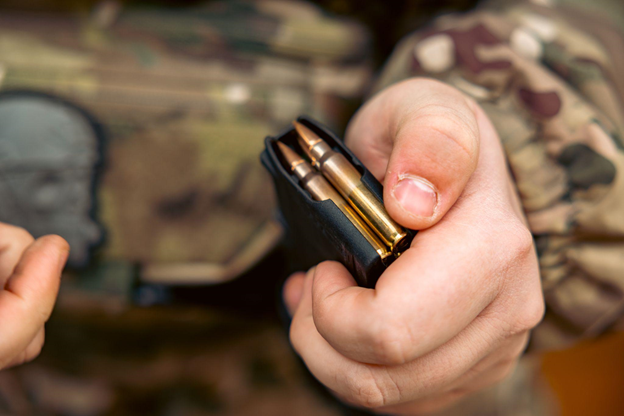
Damaged feed lips will almost certainly cause a failure to feed, and in fact, the feed lips are among the most sensitive designs of the whole magazine.
The feed lips ensure that the cartridges are perfectly oriented and properly aligned so that the action can strip them off the top of the mag and push them into the chamber without binding or sticking or catching on the feed ramp or chamber edge.
If the feed lips are distorted, warped, or dented in any way, the magazine will very likely cause jams or just not feed.
It’s also the case that rough feed lips, specifically under the lip where it actually contacts the brass, can cause sticky or unreliable feeding. Some very light sandpaper under the feed lips can help rectify this issue where it becomes apparent.
4. Make sure the magazine is charged properly and the catch is engaged
It may be that there is nothing wrong with your rifle magazine, specifically, but that it is not properly charged. Drop the mag and after inspecting, if nothing looks amiss, charge it again and give the base plate a firm rap upwards to ensure that the magazine seats and catches properly.
If the mag doesn’t catch, it’ll likely be too low for the action to properly strip off and feed a cartridge.
5. Inspect the follower
A damaged follower could also be a culprit here. Just like the feed lips make sure that the cartridges are properly oriented, from the top, so too does the follower, just from the bottom.
In fact, the follower is so vital that if it is deformed or improperly seated or aligned in the magazine, it will not push the cartridges toward the top of the magazine in the right configuration, and the magazine will jam.
If the follower is not attached to the mag spring, it is also possible that it just got unseated and might need to be adjusted so that the magazine will feed.
6. It could be the mag spring
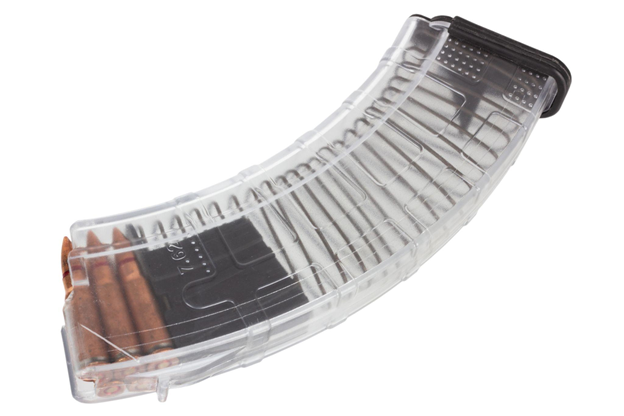
Lastly, if everything else checks out, and the whole rifle magazine looks like it’s in perfect shape, it could just be that your magazine spring is wearing out or close to fatigue. Typically you’ll know because a fatigued mag spring will just snap, but if it’s losing its elasticity, it might not be pushing up on the follower hard enough to force the rounds into contact with the action so they can be fed into the chamber.
Remember, It Might Not Be the Rifle Magazine
One more note: remember that not all failures to feed are caused directly by rifle magazines. It could be something else. Here are two more things to check.
1. Inspect the chamber
A very heavily fouled chamber can cause issues with feeding. It’s also possible that a broken shell or a jammed casing can prevent feeding, so inspect your chamber if the magazine looks alright.
2. It could be the recoil/return/buffer spring
Weak recoil, return, or buffer springs (whichever your rifle uses, if it is a semi-auto) can also lose the power necessary to strip off a new round and feed it, after they’ve been through so many cycles. Your failure to feed issue may be an old spring in the action, and not the rifle magazine.
Here for a New Rifle Magazine?
If you’re here because you need a new rifle magazine for any reason, take a closer look through our collection, and if you are looking for a mag compatible with a specific model (or any rifle part), get in touch with us directly and we will help you find what you are looking for.