
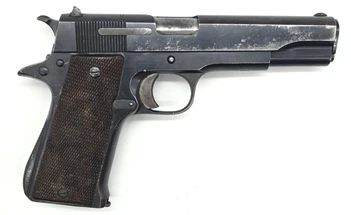
Inspecting a Military Surplus Pistol
Nov 19th 2026
Military surplus pistols can represent a great deal on firearms that would cost many times more if they were new, and this is something we have written about several times before. Military surplus is also the only way to find some models that were produced overseas or which were expressly produced for official applications and then acquired or sold secondhand, so there is that as well.
But often military surplus pistols, like other used firearms, have seen better days. If you’re buying a gun for the range, not just to sit in a safe or to be displayed or passed around as a collectible, how can you know if you’re getting a gun that you can use?
Well, this short post can potentially help with that.
Safety First
First, before you inspect any used firearm, open the action, drop the magazine, and visually and physically clear the gun before you proceed. And on top of that, observe all other firearm safe handling practices, including but not limited to keeping the barrel pointed in a safe direction and keeping your finger off the trigger.
The Barrel and Bore
All else being equal, the condition of the barrel and bore are probably the most important things to consider in the purchase of a military surplus pistol. Any gun with a barrel or bore that is in bad shape is not safe to shoot, and even if it were safe, it probably would not group accurately.
Start with the exterior. Noticeable bulges, bends, dings, or deep pitting or corrosion are all massive red flags. A military surplus pistol with a barrel in bad shape should not be fired.
After you have cleared the pistol, ask the seller if you can inspect the barrel from the chamber end to inspect its condition. There should be no shadows (which typically indicate a bulge or a bent barrel). The rifling should be crisp and clear and the interior of the bore should shine like a mirror. Pitting, rust, gouges, or anything else like that are big issues.
You should also look for a clean chamber. Chamber throats often erode before other aspects of bore health deteriorate. If there is a lot of fouling in the chamber or at the chamber throat, that could be masking a much bigger issue.
Action and Locking Components
If there is a slide lock on a slide-action pistol, it should lock up securely, either in the slide-open or action-closed configuration, with no play. It should also do so reliably.
The action should be smooth and fluid, and you should feel yourself fighting the action of the recoil spring when you manually work the slide, bolt or any other action components. Play here may indicate a worn spring that is about to fatigue. All action components that interact should do so with no play between them.
What Doesn’t Matter So Much
Now that we’ve covered the things that matter most, we can take a closer look at things that don’t really influence the operability of a military surplus pistol, even if they do impact its value.
Missing hardware, such as on the scales, or scales that are in bad shape, are more cosmetic than material. The same goes for missing sights. They are problematic but not in the sense that missing sights make a pistol dangerous to fire.
If the exterior of the gun is a little worn or dirty but there is no pitting or corrosion, that’s nothing to lose sleep over either. The same goes for if there’s a missing magazine. That can easily be replaced as long as you can find one compatible with the handgun.
All in all, many cosmetic issues can be easily addressed as long as you know what to do or what to replace, and by and large won’t adversely impact the functionality of the gun itself, despite the fact that cosmetic blemishes can adversely impact the resale value of a military surplus pistol.
A Note on Stiff Components
Sometimes military surplus pistols are protected with a grease-like compound known as cosmoline, which, though it is highly effective as a protectant and at preventing rust, can gum up parts like firing pin channels and make it hard to work parts of the gun.
Don’t attempt to force anything when looking at a military surplus pistol. Let the seller handle that. If you already own the gun, either strip it and clean it thoroughly, or bring it to a gunsmith and have them address the issue.
When In Doubt, Take It to a Gunsmith
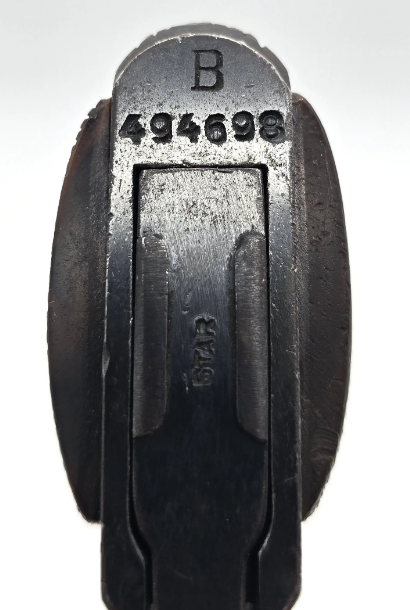
At the end of the day, if you already own a military surplus pistol that you know has seen better days and are not comfortable diagnosing a problem yourself, take no chances. Improper headspace, issues with bore condition, and mechanical failures can result in a pistol that is not safe to fire until the issue is remedied. That is best left to a gunsmith, which is exactly the place you should take any military surplus firearm that you need evaluated in-depth.