
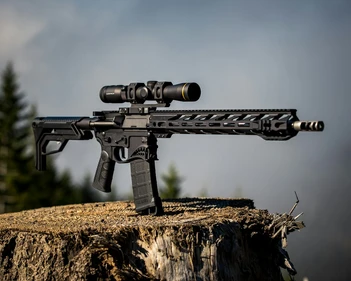
AR15 Gun Parts: A (Nearly) Comprehensive List
Oct 5th 2026
America’s Rifle, the AR15, is a complex platform that, despite its age, is composed of many different gun parts that work together to facilitate its autoloading action. This short post will break down the major AR parts as well as what they do.
Upper Parts
Unlike many other modern breech-loading firearms, which have a single receiver to which the stock, action, barrel and trigger group attach, the AR15 has two receivers, an upper and a lower. The following are the major gun parts that attach to the upper receiver.
- Barrel: The barrel attaches to the upper receiver and is the gun part that chambers the round, trapping gasses behind the bullet so that it accelerates through the bore and towards the muzzle.
- Gas block and tube: The gas block and tube are the gun parts that comprise the gas system, which siphons gas off from the barrel back towards the bolt carrier group. An AR15 uses a gas system known as direct gas impingement, which drives the action.
- Muzzle device: AR15 rifles typically have threaded barrels and accept a muzzle device, commonly a flash hider, which obstructs the muzzle flash so as to prevent the operator from becoming temporarily blinded. However, ARs can also accept muzzle brakes, which reduce felt recoil and muzzle jump.
- Handguard: The handguard encircles the barrel, protects the gas system, and usually has either Picatinny rail or M-LOK rail slots to which shooting attachments can be mounted.
- Bolt carrier group: The bolt carrier group is the major action component and consists of the bolt itself along with a locking lug, cam pin, firing pin, extractor, ejector, and gas rings.
- Firing pin: This is the gun part housed within the bolt carrier group that, when released, strikes the primer of the cartridge, igniting the propellant within.
- Firing pin spring: The firing pin spring stores and releases energy to drive the firing pin.
- Extractor: The extractor is a claw-like gun part that engages the cartridge rim when it is chambered. When the bolt carrier group unlocks and moves to the rear during cycling, the extractor pulls the spent casing free of the chamber so that it can be ejected.
- Ejector: The ejector is a spring-actuated gun part that actually ejects the cartridge once the extractor pulls it clear of the chamber.
- Ejection port cover: Also called a dust cover, the ejection port cover is a gun part that can be used to cover the ejection port, helping to prevent dust and other particulate matter from entering the action of the rifle.
- Forward assist: The forward assist is a gun part that can be manually engaged to fully close and lock the rifle’s action if for some reason the bolt carrier group ever does not return to battery.
- Charging handle: The charging handle is a gun part, typically located at the rear of the upper receiver, that is used to manually open the rifle’s action. Most AR15 rifles have a rear-charging handle, but some are side-chargers.
Lower Parts
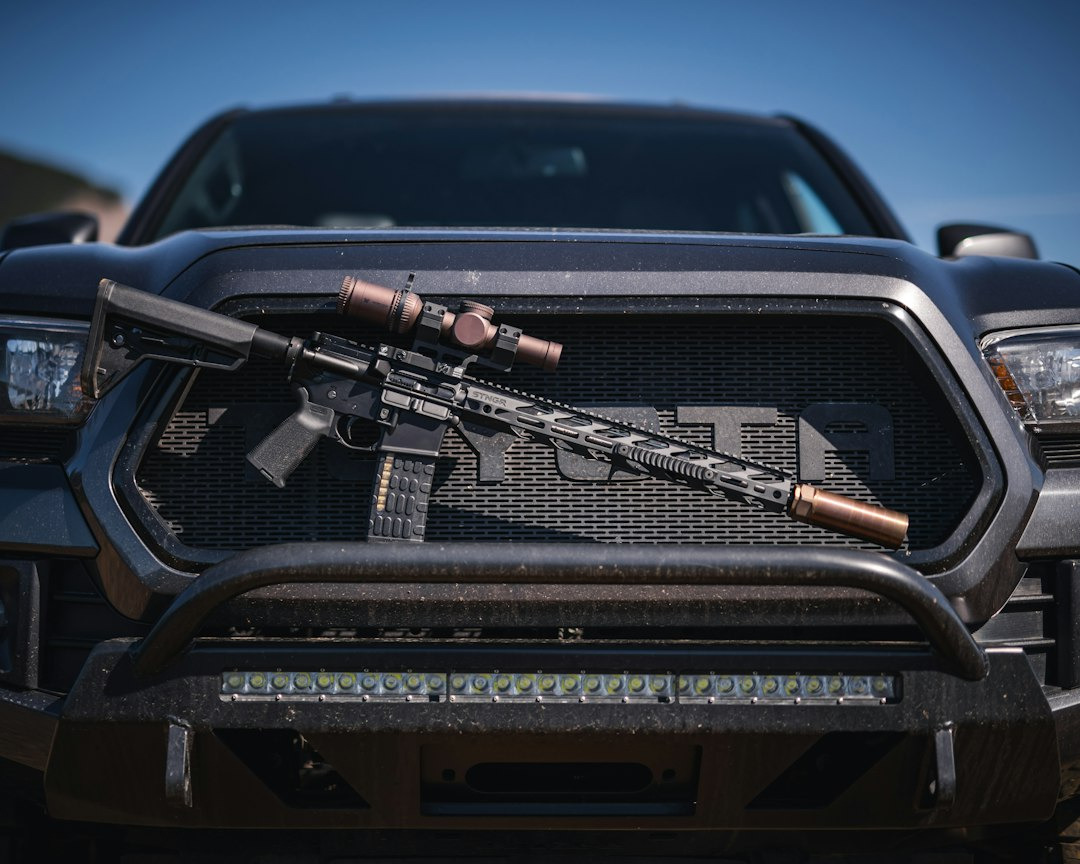
The lower receiver is the second receiver that attaches to the upper and which accepts the following gun parts which in this instance are referred to as lower parts. The lower receiver is also the component that is considered to be the actual “gun” by the ATF. As a result, lower receivers, sometimes simply referred to as lowers, are serialized and require an FFL transfer.
- Trigger group. The trigger group of an AR15 controls the sear, hammer and disconnect which in turn communicate with the firing pin.
- Safety selector. The safety selector lever is the manual external control which, manipulated by the operator, can set the gun to “fire” or “safe”.
- Pistol grip. The pistol grip mounts to the lower receiver; its purpose and function are relatively self explanatory.
- Stock. The stock mounts to the buffer tube which is itself attached to the lower receiver. It enables the gun to be shouldered, stabilizing it. There are fixed, folding, and adjustable stocks available for AR-style rifles.
- Buffer tube. The buffer tube houses the buffer weight and springs and is an important gun part. It is also the part to which the stock attaches.
- Buffer spring and weights. The buffer weights help produce resistance to slow the rearward progress of the bolt carrier group as it moves rearward during cycling. The buffer spring also helps slow the progress of the bolt carrier group and stores potential energy so that the BCG can be returned to battery.
- Magazine. Not always considered a gun part in the sense that it is not necessarily integral to the platform itself, the magazine nonetheless holds rounds and feeds them into the action as the rifle cycles.
Shop AR15 Gun Parts Here
Looking for a collection of AR15 gun parts? Check out our collection, which includes complete build kits, which have everything you need to assemble a functioning rifle except for the lower receiver itself. If you have any questions about the gun parts mentioned, or others, get in touch with us and we will be happy to assist.