
About the Mauser 98’s Action
May 20th 2026
The Mauser 98 is one of the infamous and influential rifles in history. Still in production, the official website even claims it is the ancestor of all modern bolt-action rifles, and truthfully, that’s not that far off the mark.
Let’s take a closer look at what makes it so unique.
A Better Bolt-Action
There are several features that make the Mauser 98 a remarkable rifle by any metric. If it weren’t it would be so coveted. But it is the design of the bolt action that really sets it apart.
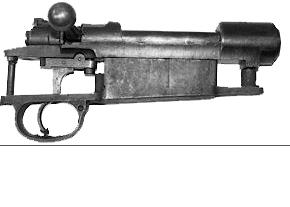
It starts with the Mauser 98’s receiver, which houses the action and trigger group and which serves as the shroud.
The main distinction has to do with the design of the Mauser 98’s bolt group. It consists of three locking lugs at the bolt head. Previous iterations of rifle bolts typically had only two.
This is a big consideration since only two of the locking lugs actually oppose each other and lock the action. The third locking lug is a redundant failsafe to secure the action in the event of a failure of the other two main lugs. (One of the main reasons the third lug does not lock like the two main lugs is to prevent asymmetric bolt thrust forces upon firing.)
The third locking lug was a new feature on the Mauser 98 and was not present beforehand, but it considerably increased the strength and integrity of the Mauser 98 rifle’s action.
The Mauser 98 receiver’s ring was also enlarged to accommodate the changes that were made to the action. The smaller receiver rings of previous generation Mauser rifles were smaller and not as strong. Together, the Mauser 98 receiver and bolt-action were considerably stronger and more reliable than those of previous versions.
Another feature that strengthens the general, overall design of the Mauser 98 action is that the bolt handle is permanently fixed to and integral with the bolt body. This doesn’t necessarily influence the strength of the locking action, but it does result in a bolt that is much more robust and durable overall.
In addition to the third locking lug of the Mauser 98’s bolt that significantly improves its strength, there are other features that improve the action’s safety in the event of a failure. For instance, there are two gas relief holes on the bottom of the bolt as well as a gas shield on the bolt sleeve. In the event of a failure like a case rupture, gasses are vented through the magazine. This helps prevent hot, high-pressure gasses from being vented back into the operator’s face, significantly improving safety.
The barrel shank was also enlarged in the Mauser 98; as with previous iterations of the receiver which were rectified with the Mauser 98 receiver’s more robust construction, the larger barrel shank in the Mauser 98 was stronger and more reliable than those of previous generations.
Also relevant to the action of the Mauser 98 was the improved extractor. In the Mauser 98, the bolt’s extractor is a claw extractor that does not rotate. It also engages the cartridge rim as soon as the cartridge leaves the magazine and it maintains its hold on the cartridge rim until after it has been fired and is ejected.
The non-rotating design of the extractor which is now found in actions known as “Mauser-type Controlled Round Feed” is reliable, consistent, and helps prevent malfunctions such as double feeds. Like the redundant third locking lug, it is now a feature found on other rifles.
As a result of these features, the Mauser 98’s action is remarkably consistent and reliable, and very unlikely to jam. Regardless of how the rifle is handled or the action manipulated, if the bolt is cycled securely and smoothly, and retracted all the way during cycling, the rifle should feed, fire, and extract without malfunctions.
There are other features of the Mauser 98 action that improved it over previous designs as well. For instance, the distance the firing pin needs to travel in its channel was decreased in the M98 and reduced lock time slightly, improving the responsiveness of the rifle.
The Mauser 98’s bolt also features a cocking piece that visibly protrudes from the rear of the bolt when the rifle is cocked, serving as a visual and tactile indicator that the action is closed and cocked, and that the rifle is ready to fire.
These and other features improved the Mauser 98 significantly, and have trickled down to other rifles over the years. Suffice it to say the M98 action was revolutionary and remains one of the best firearm actions ever developed.
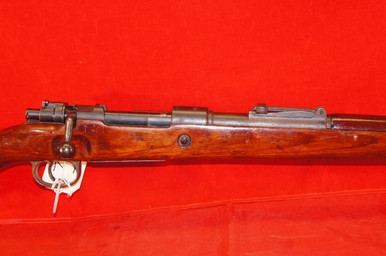
Looking for a Mauser 98 Receiver or Other Parts?
If you’re here for a Mauser 98 receiver or some other Mauser 98 parts? Check out our collection and if you’re looking for something specific get in touch with us and we will be more than happy to help.