
About Shotgun Barrel Blanks: What to Know
May 6th 2026
Got a shotgun that has a barrel that’s bulged? Or rusted or pitted beyond reasonable use? Or perhaps you just have a buddy that’s a gunsmith who’s always willing to do custom work for you.
In any case, a shotgun barrel blank can give you the flexibility to get the job done, whether you just need a replacement or are interested in some custom work. Here’s what to know.
What Is a Shotgun Barrel Blank in the First Place?
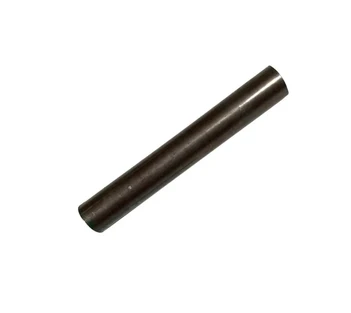
To keep things as simple as possible, a shotgun barrel blank is basically a bored out, cylindrical piece of steel that’s already been drilled and reamed to a specific gauge (like 12, 20 or .410) but which has not been chambered, contoured, fitted, or, if relevant, threaded.
Generally, shotgun barrel blanks have already been “gundrilled,’ which is the process of drilling out the bore of the barrel. The tolerances are very tight and the barrel blank must be drilled to the precise caliber or gauge necessary.
It’s exactly what it sounds like. It’s a piece of raw material that has some of the basic work done, and which a gunsmith can use to produce a finished shotgun barrel.
They’re great for custom jobs, as well as for making replacement barrels for shotguns that need to be repaired. For instance, rust, corrosion, pitting, bulging, and other damage that require barrels to be replaced can be rectified with the help of a gunsmith and a shotgun barrel blank.
Barrel Blank Alloys
To serve as a gun barrel, a steel blank must be made with an appropriate alloy, but there’s more than one that can be (or is commonly) used.
Many shotgun barrel blanks are made with “SS” which stands for stainless steel, and which is preferred for its ability to resist staining, corrosion, rust and pitting. The 400 series of stainless steels are commonly used for gun barrels for its strength and corrosion resistance. One of the prime alloys is 416R, which has a higher hardness in addition to excellent corrosion resistance. The shotgun barrel blanks in our collection are graded as “SS” for stainless steel.
Another common alloy, though it is more frequently used in rifle barrels, is an alloy known as “chrome-moly” or “chromoly” which is so called because it contains concentrations of chrome and molybdenum. These elements make the steel hard, strong, and corrosion resistant.
Reaming and Stress Relieving
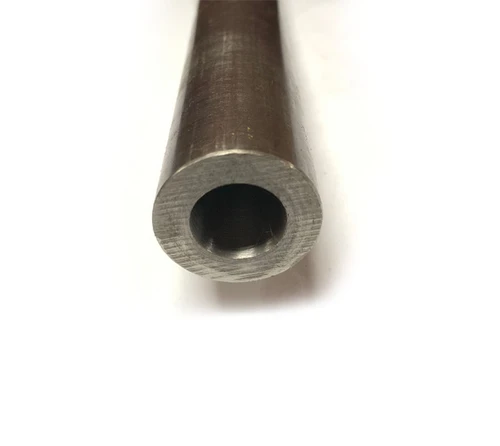
While shotgun barrel blanks are typically gundrilled (bored) to the appropriate diameter according to intended chambering, they must still be reamed by a gunsmith.
Reaming is the process of “finishing” the bore of the barrel so as to create a precise and consistent inside diameter (ID) which will result in greater accuracy and consistency when firing. A barrel that is not appropriately reamed is not likely to consistently pattern.
As the barrel is reamed, the swarf (metal chips that are produced during the process) is carefully evacuated from the barrel blank, so as not to damage the finish of the inside surface. This is why when you look through a shotgun barrel from the chamber end, it looks polished, almost like a mirror. This smooth and precisely-finished surface aids in consistency in the shotgun’s pattern, and in a rifle it would influence accuracy.
After the blank is reamed and has the proper ID, it can be rifled, but in most shotgun barrels, this step is not performed, unless the barrel will be used on a slug gun.
Next, the barrel should be stress relieved, to help alleviate the stresses that were incurred on it by reaming and any other forming processes that were incurred during production. Doing so involves heating them and holding them at a certain temperature before allowing them to return to ambient temperature in controlled fashion. In addition to relieving stresses on the alloy, this should also improve the strength of the steel.
Contouring, Chambering, Finishing, Fitting
From this point, the barrel can be contoured to the dimensions of the specific platform on which it will be installed, and the chamber can be machined and finished.
Then the barrel can be treated with the desired finish before any final fitting work must be accomplished to ensure it is compatible with the platform with which it is destined. Lastly, the finished barrel, no longer a blank, can be fitted to the gun.
Explore Shotgun Barrel Blanks and Other Shotgun Parts Here
Have a shotgun for which you need a new barrel? We carry shotgun barrel blanks along with other shotgun parts.
Take a look through our collection of barrel blanks and shotgun parts and get in touch with us if you have any questions. All of our blanks are first class production of the highest quality and contain no blemishes or other defects.
They’re perfect for making upgrades, repairs, and for custom work, and ideal for gunsmiths, but let us know if you have any questions before buying.