
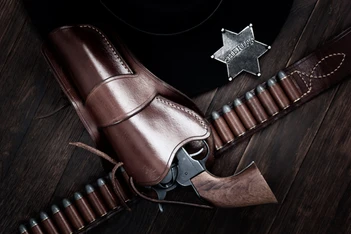
5 Important Things to Know About Leather Holsters
May 11th 2026
Everyone knows leather holsters are classy, and everyone knows they’re more comfortable, too.
But not everyone knows these 5 important things about them. Check these against your current knowledge and make sure you take notes if you didn’t know any of them.
- You should not keep your gun in a leather holster for a prolonged period of time
While leather holsters have tons of advantages over plastic holsters (for instance, they will not mar the finish of a gun and they are more comfortable), there is one important consideration you need to observe, and it is that you should not leave a gun in a leather holster for a prolonged period of time.
This is because, despite the fact that leather is breathable, it does trap moisture, and that can be a big problem. If you leave a gun holstered in a leather holster while you are not carrying, it can trap moisture against the gun, which can cause corrosion, rust, and even pitting.
Even if it doesn’t, that exposure to moisture can chemically damage the finish of a gun in ways a plastic holster would do so physically. So just make sure you don’t keep your gun holstered in leather except when you are carrying. Otherwise, air it out.
- Over time, a leather holster will form a unique patina
High-quality grades of leather, namely top grain and full grain leather, will develop what is called a patina over time and with use. A patina is basically a unique finish, not entirely unlike a pattern, that will form on the surface of the leather holster as you wear and carry it.
The leather will darken in areas and lighten in others, and start to manifest creases and other patterns of wear that will be entirely unique to it. There is no way to apply a good fake patina; the only way to get a real patina is to use the holster, and like all good things, the formation of patina takes time.
But it is well worth it, and while it won’t necessarily impact the value or quality of the leather, it will definitely increase its character, class and aesthetics.
- Leather holsters need to be conditioned periodically or they will dry out
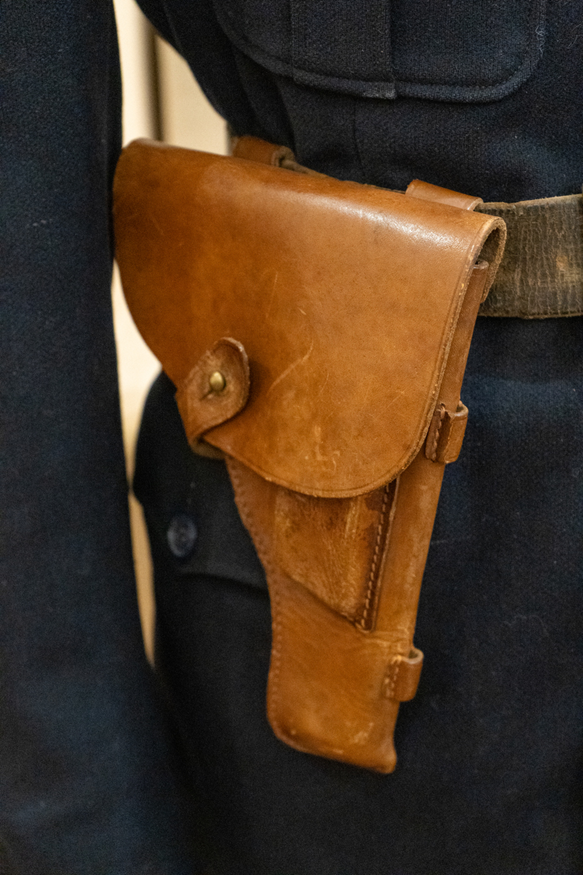
Leather is a supple, natural material, but those properties come at a price. That price is routine care and maintenance, without which, leather will eventually degrade and fall apart, regardless of the initial level of quality or grade.
This is because leather is actually real skin with pores and fibers. Over time, these fibers dry out and contract, which makes them lose their shape, their softness, and which makes them become brittle. Exposure to extreme temperatures, as well as exposure to humidity or moisture, can exacerbate these issues.
The fix is to periodically treat the leather with an appropriate conditioner that will restore its natural oil content, keeping it soft, supple, and flexible, and preventing the fibers from warping or becoming excessively brittle.
You should clean and condition your leather holster at least once every six months, whether you routinely carry it or not, as this will help ensure that it doesn’t suffer permanent damage.
- The fit of a leather holster will improve with time
With a Kydex holster, or any plastic holster, the fit you get on day one is the fit you get. Not only will it not improve, but friction fit can actually loosen up and deteriorate with time.
As a general rule, this will not only not happen with leather, but the fit of a leather holster to a gun will more often than not improve with time and use.
This is because leather fibers will stretch to accommodate the individual contours of a gun with wear, affording what is effectively a custom fit.
After a year or a few years of carrying in a leather holster, provided you’ve properly cared for the holster, it will fit your gun like a proverbial glove.
- Leather holsters do need to be broken in, but there are things you can do to speed this up
While leather holsters need to be broken in (unlike plastic holsters) there are ways you can do to accelerate the process.
The easiest way is just to carry, but if you need to fast-track break in, you can place your gun in the holster, secure the flap (or any other retention features) and leave it in there for a day at a time.
This will help the holster form to the gun’s contours on a slightly accelerated schedule.
You might also choose to apply a little neatsfoot oil to an excessively stiff holster, but be sparing, because neatsfoot oil softens leather, and the process of softening leather is effectively irreversible.
Invest in a New, Heirloom-Quality Leather Holster Here
Whether you’re looking for a leather 1911 holster or something for an old-school black powder revolver, we have leather holsters for a wide variety of different handguns.
Shop our full collection here and if you have any questions about sizing, compatibility or features, get in touch with us directly and we will do our best to help you out.